
As AI achieves technical parity, global organisations can stand out via human connection, communication, and empathy
In 2026, most major global businesses will use some form of generative AI, from drafting reports to routing logistics. The tools themselves have lost their competitive advantage because everyone has them.
The difference between companies that succeed and those that don’t is having skilled people to use these advanced technologies. Specifically, people who can communicate across cultures, read a room, make judgment calls in grey areas, and build the kind of trust that no chatbot can fake. These are human-centric skills, and they’ve become the scarcest resource in the modern workforce.
Human capability is reshaping workforce strategy. Here's what the trends show — and what HR, L&D, and operations leaders need to do now. It covers the five human-centric skills driving growth, why AI translation can’t replace real connection, and a practical strategy for building the workforce that wins in the years ahead.
The 2026 reality: AI as the baseline, humans as the differentiator
The commoditisation of technical tasks
AI agents can now handle specialist skills like coding, data synthesis, first-draft copywriting, and basic financial modelling, all of which used to be specialist skills that took years to develop.
The 2025 World Economic Forum’s Future of Jobs Report found that employers expect 39% of workers’ core skills to change by 2030. This figure is slightly down from 44% in 2023, but still signals massive disruption.
When looking closer at which skills are rising, the picture gets interesting: technology skills in AI and big data are growing fast, yes. But so are creative thinking, resilience, flexibility, and agility.
When everyone can automate the “what”, competitive advantage shifts to the “how” and “why”. How do you read a client’s unspoken concern during a negotiation? How do you navigate a difficult conversation with a colleague whose first language isn’t your own? These are questions AI can’t answer, and they’re the questions that determine whether a deal closes or a project ships on time.
The paradox of automation
Here’s the uncomfortable truth about automation: the more you remove humans from routine interactions, the higher the stakes become when a human does show up. Every customer service call that reaches a real person is now an escalation. Every face-to-face meeting is a relationship-defining moment.
Deloitte’s 2026 Global Human Capital Trends survey, conducted with Oxford Economics across more than 9,000 business leaders in 89 countries, is blunt about this. Building the “human advantage” is now as critical as managing technology itself. The report argues that organisations need people who can learn, adapt, and reinvent in real time, not just workers trained on last year’s tools.
For L&D teams, this means the old playbook of software training every quarter or so is no longer enough. The gap isn’t technical literacy. It’s the ability to work with, through, and for other people in a world that’s increasingly mediated by machines.
The top 5 human-centric skills driving growth in 2026
1. Advanced intercultural communication
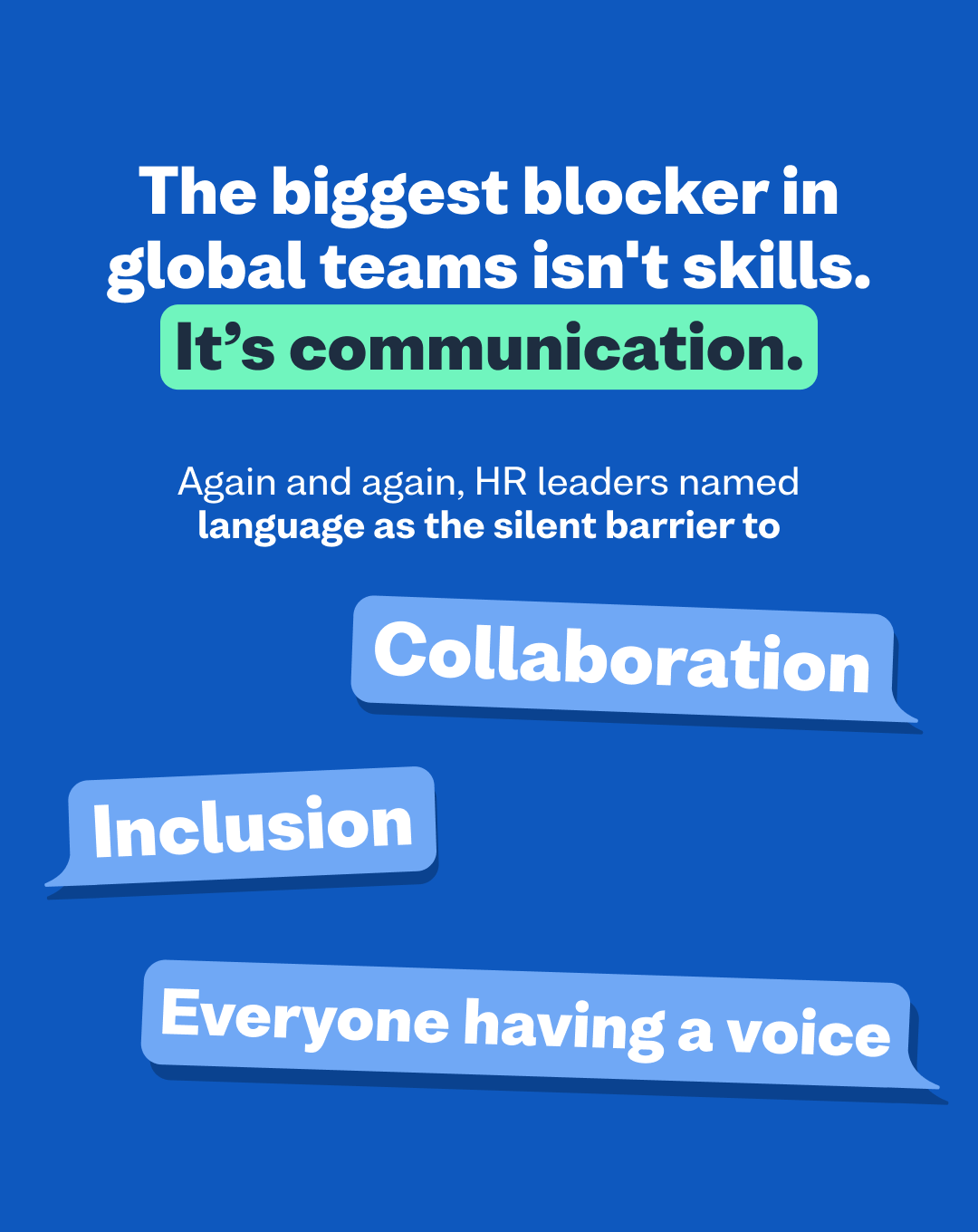
Translation tools can convert words between languages, but they can’t decode the meaning behind a Japanese client’s polite hesitation or explain why an excruciatingly direct email from a German colleague is just German business culture. Advanced intercultural communication goes well beyond vocabulary. It’s about tone, timing, context, and the ability to adjust instinctively.
For companies with distributed teams, this skill directly affects project delivery, client retention, and internal cohesion. A misread cultural cue in a pitch meeting can cost a quarter’s revenue. Getting it right builds the kind of loyalty that price competition can’t touch.
2. Ethical judgement and nuanced decision-making
AI is excellent at pattern recognition, but terrible at moral or bigger-picture reasoning. When an algorithm recommends consolidating two departments based on overlapping job titles, but someone knows those teams handle fundamentally different customer segments, human knowledge and oversight are needed. Ethical judgement means knowing when the data is right, but the decision would be wrong.
This is especially pressing in industries like pharma, finance, and logistics, where regulatory grey areas are common and reputational damage is expensive.
3. Strategic empathy and relationship management
In a world flooded with automated outreach like AI-generated emails, chatbot follow-ups, and synthetic voice calls, human connection stands out precisely because it’s rare.
McKinsey’s research on why employees leave is telling: the top three reasons weren’t pay or perks. They were not feeling valued by the organisation (54%), not feeling valued by their manager (52%), and not feeling a sense of belonging (51%). Strategic empathy addresses all three.
4. Adapting to changes as a team
The problems worth solving in 2026 aren’t linear. They involve multiple teams, time zones, languages, and disciplines working on challenges where the brief changes mid-project.
Collaborative adaptability is the ability to hold plans loosely, communicate changes clearly, and keep diverse groups aligned without resorting to top-down control.
It’s the difference between a team that falls apart when a key assumption breaks, and one that recalibrates within a day. Organisations that develop this skill across their workforce move faster, not because they plan better, but because they recover better.
5. Linguistic agility
Yes, AI can translate a meeting in real time. But speaking someone’s language, even imperfectly, signals respect, builds rapport, and opens doors that no translation tool can. A sales director who opens a call in a client’s native language, even for just the first thirty seconds, changes the entire dynamic of the conversation.
Linguistic agility isn’t about fluency in ten languages. It’s about the willingness and confidence to communicate across linguistic boundaries. And that confidence comes from structured practice, not from relying on a browser plugin.
Why AI can translate, but it can’t connect
The limitations of machine communication
Automated customer service has created what some UX researchers call an “uncanny valley” for communication. The responses are grammatically perfect, contextually reasonable, and emotionally empty. Customers sense it, and employees sense it too.
The commercial cost is real. When a frustrated client reaches the end of a chatbot loop and finally gets a human, the interaction’s already soured. Now multiply that across thousands of touch points a month. The companies with the best retention figures in 2026 are the ones that deploy AI for efficiency and humans for impact, not the ones that replaced their entire frontline with bots.
There’s a parallel inside organisations. Teams that rely on AI-generated summaries and automated updates lose something harder to measure: the informal knowledge sharing that happens when colleagues actually talk, like asides during a video call, and quick clarifications that prevent a two-week detour on a project.
Building high-trust organisations
Harvard Business School Professor Amy Edmondson’s work on psychological safety has made it clear that innovation doesn’t happen in cultures of fear. Teams perform better when people feel they can speak up, challenge ideas, and admit mistakes without punishment.
That’s an environment only human leaders can create. No AI tool, however sophisticated, can build the interpersonal trust that makes a junior analyst comfortable flagging a flaw in a senior director’s model.
For multinational teams, trust gets even harder. Language barriers, cultural differences, and time zone gaps all chip away at psychological safety. Investing in real language skills over translation tools is one of the most direct ways to rebuild it.
Strategy: How to build a human-centric workforce
Auditing your current human capital
Most skills audits still focus on technical competencies: which certifications do employees hold, which tools can they use, which systems have they been trained on? That’s necessary but incomplete. A 2026-ready audit also measures communication intelligence, like how well employees work across cultures, resolve conflicts, and articulate ideas under pressure.
Start with the roles where human interaction has the greatest commercial impact, like client-facing teams, cross-border project leads, and people managers. Map not just what languages they speak, but how confidently they speak them, and where the gaps cost time or deals.
Investing in high-touch learning and development
Passive, video-based training has low completion rates and even lower retention. What works is social learning: real conversations with real people, practised in realistic contexts, with feedback that adapts to the learner.
Busuu’s model of live group lessons, capped at five learners per session and led by a certified teacher, is built around this principle. It’s structured enough to track progress, and social enough to build the confidence that transfers to real work situations. Combine that with self-paced, bite-sized lessons on mobile, and you’ve got a programme that fits around the working day, rather than competing with it.
Rewarding soft skills in leadership
If empathy and communication aren’t part of how you promote people, they won’t be part of how people develop. It’s that straightforward. Too many organisations still promote based solely on technical performance, then wonder why their new managers struggle with team dynamics.
Make communication skills a visible criterion in leadership assessments and promotion reviews. When employees see that the company values how they work with others, not just what they deliver, behaviour shifts across the organisation.
The ROI of humanity: Measuring the competitive edge
The business case for human-centric skills isn’t abstract. It shows up in retention, client lifetime value, project delivery speed, and brand reputation. Here’s how two approaches compare in 2026:
|
Metric |
AI-centric firms |
Human-centric firms |
|
Operational efficiency |
High: automated workflows reduce costs. |
High: but with human oversight at key decision points. |
|
Employee retention |
Low: disengagement and “job as a task” mentality. |
High: employees feel valued and connected. |
|
Client loyalty |
Declining: impersonal interactions erode trust. |
Strong: genuine relationships deepen over time. |
|
Innovation |
Incremental: AI optimises within existing parameters. |
Breakthrough: psychological safety enables risk-taking. |
|
Brand position |
Commodity: competing on price and speed. |
Premium: competing on trust and expertise. |
|
Culture resilience |
Fragile: high turnover disrupts teams. |
Durable: shared values and mutual respect anchor teams. |
The maths is stark. If a human-centric L&D programme prevents even a handful of senior departures per year, it pays for itself several times over. Add the revenue impact of better cross-cultural client relationships and faster project delivery, and the case moves from “nice to have” to “board-level priority”.
Frequently Asked Questions